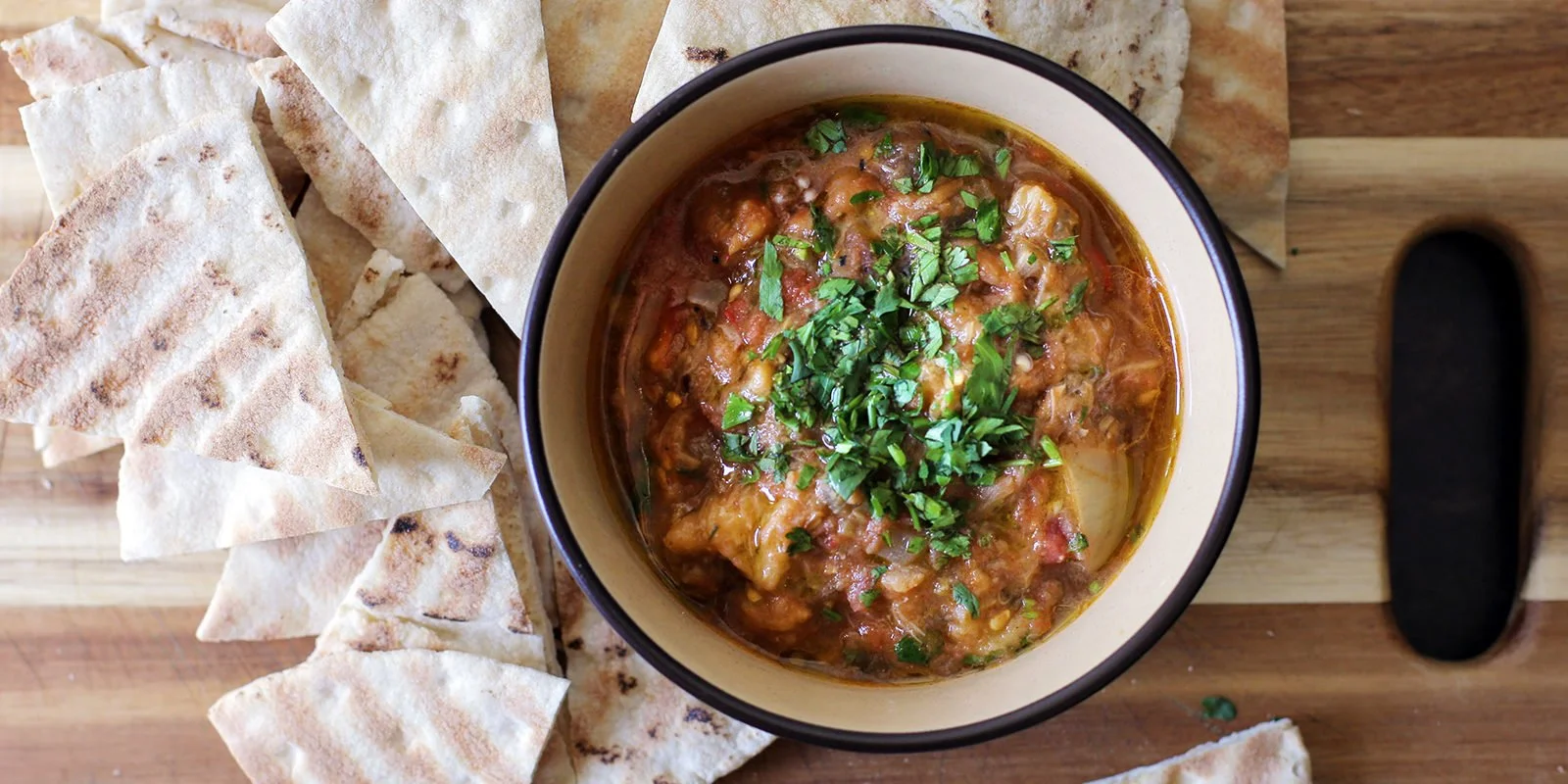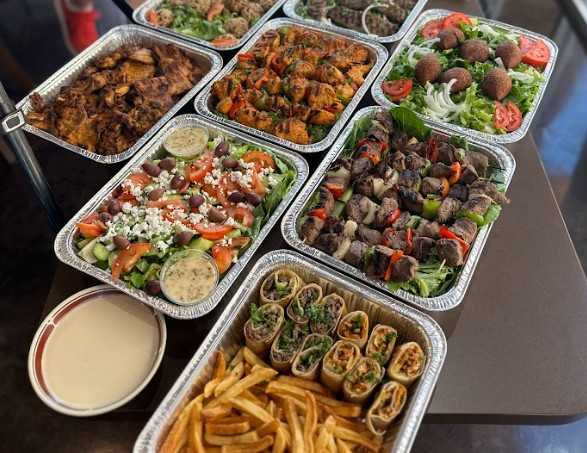
For a catered meal, start with the number of people eating and the serving range for the exact tray size you plan to order. Do not count every tray as if it feeds the same number of guests.
A tray of meat, a tray of rice and a container of sauce play different roles in the meal. This guide shows how to plan a Mediterranean spread for 20, 30 or 50 guests, then confirm the final quantities with your Princess Pita location.
A lunch or dinner needs enough main dishes and sides for everyone to make a plate. Food served between meals may have a different role, particularly if other refreshments are already planned.
Tell the restaurant what the food is replacing. “Lunch for 30 adults” is more useful than “30 people,” because it explains the expectation behind the count.
Also note children, unusually long serving periods and other food being provided. Share those details rather than making a blanket assumption that every child counts as half a portion or that a longer event needs twice as much food.
Suppose the tray size you select is labeled as serving 10 to 15 people. For a conservative starting calculation, divide the number of people who will eat that item by 10 and round up to a whole tray.
That produces this simple example:
These numbers are an illustration of the calculation, not a statement that every Princess Pita tray serves 10 to 15 people. Check the actual item, size and serving description in the current menu. Ask whether the yield assumes the item is a main course or part of a larger spread.
If your selected tray has a different serving range, use that range instead. A restaurant-confirmed portion plan is more useful than a generic rule based on the size of an aluminum pan.
Do not automatically order enough of every main for the entire party. First decide how the group is likely to divide between choices.
For example, a 30-person lunch might include 24 people who eat meat and 6 who need a vegetarian meal. That is a planning example, not a recommended mix. If several of the meat-eating guests also want falafel, include them when discussing the falafel quantity.
You might choose shawarma as one main and falafel as another, or choose from the other options on our catering menu. Tell the restaurant whether guests will select a single main or sample several. The serving plan changes how the quantities should be divided.
After the mains, check the sides against the number of people who will eat them. If most of the party wants rice or salad, do not use only the meat-eater count when planning those dishes.
Review these parts of the order individually:
A tray count is not a complete order by itself. Check whether pita, sauce and serving utensils are included, sold separately or optional. The description for a dining entree should not be used to assume what comes with a catering tray.
Add a buffer when you have a reason, such as uncertain attendance or a group that expects seconds. Ask the restaurant where a modest increase would be most useful instead of adding another tray of every dish.
If you want leftovers, say so during planning and have appropriate storage ready. Ordering extra without a storage plan can turn a generous spread into food that cannot be safely kept.
For an outdoor party, check the forecast and arrange suitable hot and cold holding before collecting the food. Shade alone does not keep perishable food at a safe temperature.
For home-style buffets, USDA guidance recommends holding hot food at 140°F or above and cold food at 40°F or below. Perishable food left without appropriate temperature control should be discarded after two hours, or one hour when the temperature is above 90°F. Use a food thermometer and account for transport and serving time.
Ask the restaurant about handling instructions for your order. Confirm any warming equipment is suitable for the venue, and keep portions that are not yet being served under appropriate temperature control.
Before choosing tray sizes, have these details ready:
Browse the Princess Pita catering menu and confirm the portion plan with your chosen Mesa, Tempe, Midtown Phoenix or South Phoenix location before placing the order.
You must be logged in to post a comment.